
Soil Bearing Capacity: What It Is, Why It Matters & How Engineers Test It
When a new building or infrastructure project begins, the first question every structural engineer and site supervisor must answer is:…

When a new building or infrastructure project begins, the first question every structural engineer and site supervisor must answer is:…

When we talk about the stability of a structure, especially those built on challenging soil conditions or in earthquake-sensitive regions,…

Columns are among the most important structural elements in a building. Their primary purpose is to transfer loads from slabs,…

A tie beam is a horizontal RCC or steel structural member that connects two or more columns to reduce their…

The Stages of Building Construction Before we go deep into materials and terms, let’s understand the sequence of how a…

Why Slab Reinforcement Inspection Cannot Be Compromised Walk onto any construction site before a slab pour, and you’ll notice one…

In reinforced concrete (RC) design, steel bars resist tension developed in beams and slabs. The tension zone shifts depending on…

Steel reinforcement is the backbone of any reinforced concrete structure. It provides the strength and ductility that plain concrete alone…

Construction is often misunderstood as a field that only belongs to civil engineers. But in reality, construction projects—whether buildings, bridges,…...

Urban flooding in India is no longer a rare shock—it has become an annual reality in major cities. From Mumbai…
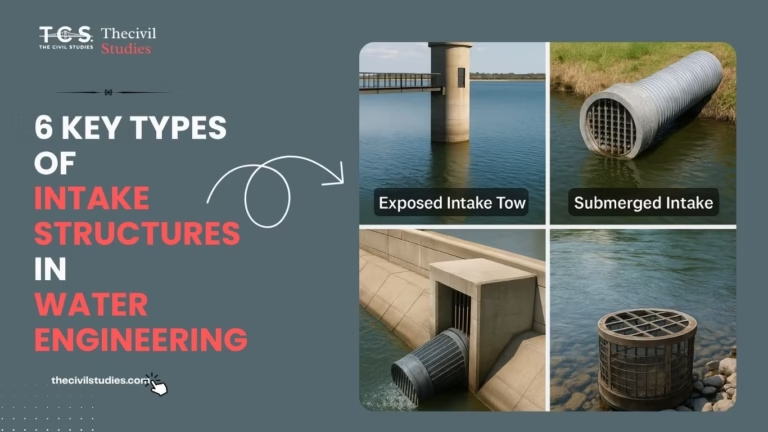
Water is the backbone of every civil infrastructure system—whether it’s drinking water supply, irrigation, or industrial use. But before water…...

Cracks developing in reinforced concrete columns shortly after casting are among the most frequently reported and concerning construction site issues.…